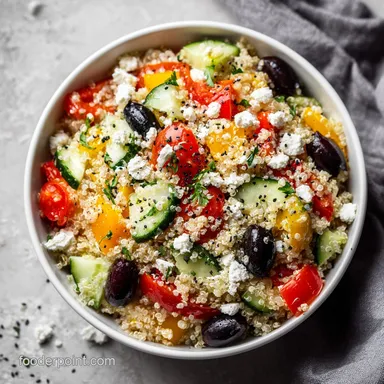
Mediterranean Quinoa Salad: Tangy & Crunchy
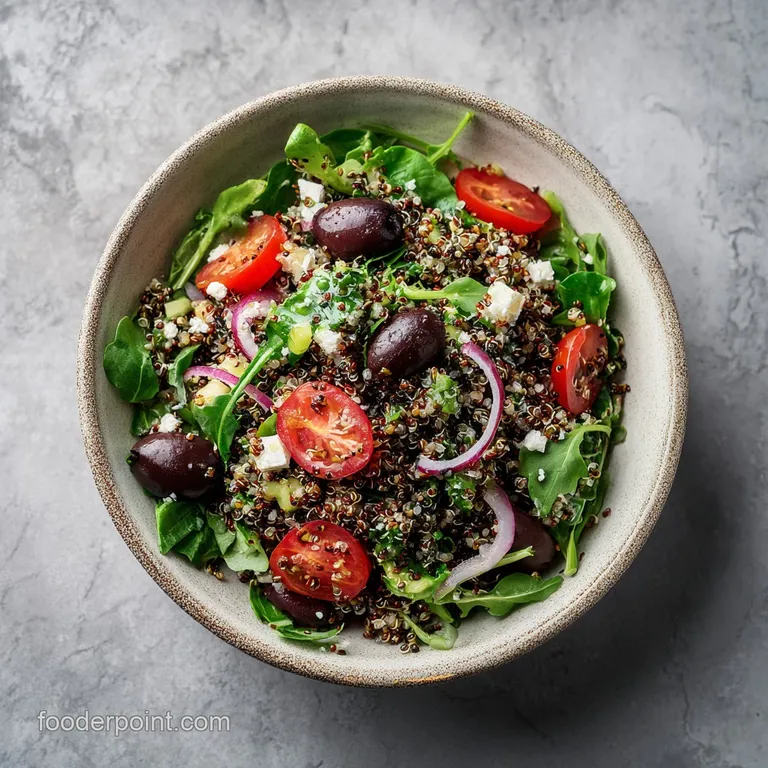
- Time: Active 15 minutes, Passive 15 minutes, Total 30 mins
- Flavor/Texture Hook: Tangy, crunchy, and nutty grains
- Perfect for: Weeknight meal prep and summer potlucks
- Science Behind Perfect Salad Results
- Essential Recipe Specifications
- Selecting Quality Fresh Ingredients
- Minimal Equipment Required
- Foolproof Salad Assembly Steps
- Solving Common Texture Problems
- Simple Ingredient Swaps
- Proper Storage For Freshness
- Ideal Serving Pairings
- Kitchen Myths Debunked
- Recipe FAQs
- 📝 Recipe Card
Science Behind Perfect Salad Results
Understanding the "why" behind the technique changes everything. Quinoa is naturally coated in saponins, which are bitter compounds meant to deter birds in the wild. If you don't rinse and toast the grain, that bitterness lingers, masking the delicate flavors of the lemon and herbs.
Toasting the grain also triggers the Maillard reaction, creating complex flavor molecules that raw boiling simply cannot achieve.
The Physics of Grain Hydration: Toasting the dry seed coats it in a thin layer of fat, which helps keep the grains separate and prevents them from bursting into a mushy texture.
Using a 2:1 water to grain ratio ensures that the starch granules swell to their maximum capacity without becoming waterlogged and heavy.
Emulsification Stability: The inclusion of Dijon mustard in the Mediterranean Quinoa Salad dressing recipe acts as a bridge between the olive oil and lemon juice. Mustard contains mucilage, a natural emulsifier that prevents the dressing from separating and sliding off the vegetables, ensuring every bite is evenly seasoned.
Cellular Osmosis Management: Adding salt to the quinoa while it cooks seasons the grain from the inside out. However, we wait to salt the fresh vegetables until the very end because salt draws moisture out of cell walls, which can lead to a watery, soggy salad if done too early.
| Prep Approach | Total Time | Grain Texture | Flavor Depth |
|---|---|---|---|
| Fast Method | 18 minutes | Soft/Bland | Low |
| Classic Method | 30 minutes | Fluffy/Nutty | High |
| Prep Ahead | 45 minutes | Firm/Marinated | Maximum |
The fast method usually skips the toasting and the resting period, which results in grains that are often wet on the outside but crunchy in the middle. By taking the extra 12 minutes for the classic approach, you allow the steam to finish the cooking process gently, leading to that sought after "pop" when you bite into the grain.
Essential Recipe Specifications
When we talk about meal prep efficiency, having exact checkpoints is what separates a good cook from a great one. I always use a kitchen scale for the quinoa because volume can vary depending on how the grains are packed. 185 grams is your magic number for a standard batch. If you are looking for more plant based inspiration, this salad pairs beautifully with a Mediterranean Chickpea Salad recipe if you want to double down on the legumes.
For Fluffy Separate Grains
To achieve the best results, you need to hit three specific numeric checkpoints. First, the toasting should last exactly 3 minutes over medium heat until you hear a faint crackling. Second, the simmer must be at the lowest possible heat setting for 15 minutes.
Finally, the "steam rest" with the lid on and the heat off must be at least 5 minutes. These timing intervals ensure the moisture is absorbed evenly through the grain.
For Maximum Flavor Infusion
The dressing is more than just a topping; it’s a marinade. The red wine vinegar provides a punchy acidity that cuts through the fat of the feta, while the fresh lemon juice adds a bright, citrusy top note. I recommend whisking the dressing for at least 60 seconds.
You want to see it thicken slightly and become opaque, which tells you the emulsion is strong.
For Lasting Vegetable Integrity
Consistency in dicing is key for the mouthfeel of this Mediterranean Quinoa Salad. Aim for 1/4 inch cubes for the cucumbers and onions. This size allows the vegetables to distribute evenly so you get a bit of everything in every forkful.
Using English or Persian cucumbers is non negotiable here, as their thin skins and lack of large seeds prevent the salad from becoming watery over time.
| Component | Science Role | Pro Secret |
|---|---|---|
| Quinoa | Structural Base | Toast dry for nutty aroma |
| Lemon Juice | Protein Denaturation | Use fresh only for enzymes |
| Dijon Mustard | Emulsifying Agent | Acts as a flavor binder |
| Sea Salt | Flavor Extractor | Seasons grain from the core |
Choosing a high-quality extra virgin olive oil makes a significant difference. Since this is a raw application, the peppery and grassy notes of the oil will be front and center. I typically look for oils harvested within the last year to ensure the polyphenols are active and the flavor is at its peak.
Selecting Quality Fresh Ingredients
The beauty of a Mediterranean Quinoa Salad lies in the contrast of its components. You want the saltiness of the olives to play against the sweetness of the cherry tomatoes. For the quinoa, I prefer a tri color blend because the red and black grains hold their shape better than the white ones, providing an extra bit of "shatter" when you eat.
- 1 cup (185g) Quinoa: Why this? The foundation that provides complex carbs and a complete protein profile. (Substitute: Couscous for a lighter, pasta like texture).
- 2 cups (475ml) Filtered water: Why this? Clean water ensures no off flavors interfere with the delicate grain. (Substitute: Vegetable broth for extra depth).
- 0.5 cup (75g) Feta cheese: Why this? Provides a creamy, salty contrast to the crisp vegetables. (Substitute: Goat cheese for a tarter finish).
- 1 can (425g) Chickpeas: Why this? Adds a dense, buttery texture and increases satiety. (Substitute: Cannellini beans for a softer bite).
- Fresh Mint and Parsley: Why this? Herbs are the "perfume" of the dish, adding essential freshness. (Substitute: Dried herbs at 1/3 the volume if fresh is unavailable).
Chef's Note: If your red onions are particularly "angry" and pungent, soak the diced pieces in ice water for 10 minutes before adding them to the salad. This removes the harsh sulfur compounds, leaving you with a mild crunch that won't overpower the other ingredients.
Minimal Equipment Required
You don't need a kitchen full of gadgets to make a restaurant quality Mediterranean Quinoa Salad. In fact, using too many tools just creates more cleanup. A standard 2 quart saucepan with a tight fitting lid is the primary tool.
If your lid is loose, place a clean kitchen towel between the pot and the lid during the resting phase to trap every bit of steam.
A large glass mixing bowl is better than metal for this recipe because glass is non reactive. This is important when dealing with the high acidity of the lemon and vinegar dressing. For dicing, a sharp chef's knife is your best friend.
A dull blade will bruise the herbs and squash the tomatoes rather than slicing through them cleanly.
For the dressing, a small mason jar is a brilliant shortcut. Instead of whisking in a bowl, put all the dressing ingredients in the jar and shake vigorously. This creates a superior emulsion in half the time and gives you a convenient way to store any leftover dressing. This minimal tool approach is something I focus on in many of my recipes, similar to the efficiency you'll find in my Creamy Tuscan Chicken recipe.
Foolproof Salad Assembly Steps
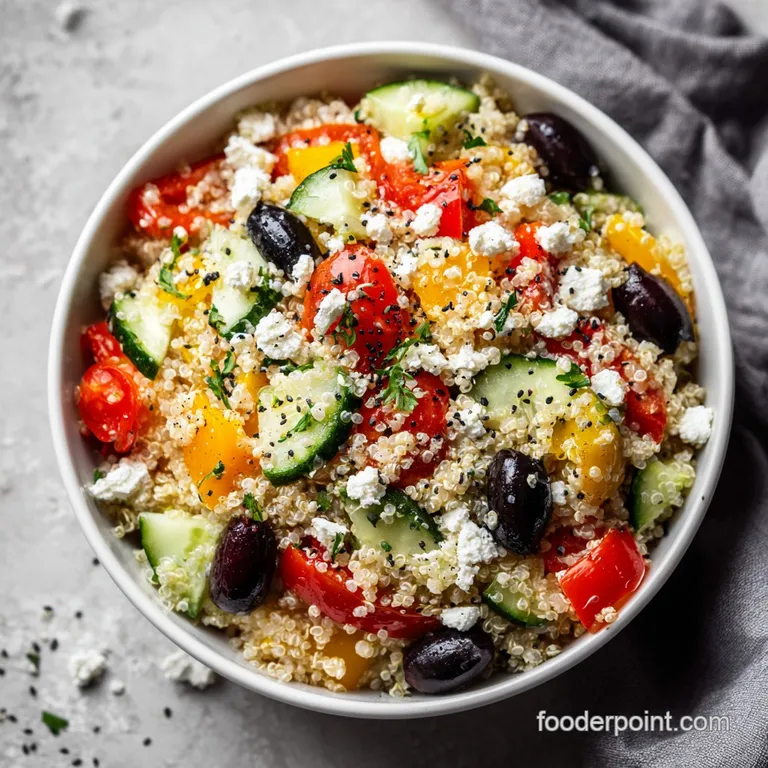
- Rinse the quinoa. Place the grains in a fine mesh strainer and run under cold water for 60 seconds until the water runs clear and foam stops forming. Note: This removes the bitter saponins.
- Toast the grains. Add the dry, rinsed quinoa to a saucepan over medium heat. Stir constantly for 3 minutes until you smell a nutty aroma and see golden edges.
- Simmer the base. Pour in the 2 cups of water and 0.5 tsp sea salt. Bring to a boil, then immediately turn the heat to the lowest setting. Cover and cook for 15 minutes until all liquid is absorbed.
- Steam and fluff. Remove the pan from the heat and let it sit, covered, for 5 minutes. Fluff with a fork until the grains are airy and separate.
- Prepare the vinaigrette. In a jar or bowl, combine the 0.25 cup olive oil, 3 tbsp lemon juice, 1 tbsp red wine vinegar, minced garlic, dried oregano, and 0.5 tsp Dijon mustard. Shake or whisk until the mixture is thick and pale yellow.
- Prep the vegetables. Dice the cucumber, halve the tomatoes, and finely dice the red onion. Drain and rinse the 425g of chickpeas until no starchy liquid remains.
- Combine the warm grains. Pour half of the dressing over the quinoa while it is still warm. Note: Warm grains absorb flavor more deeply than cold ones.
- Add the fresh components. Once the quinoa is at room temperature, fold in the chickpeas, cucumbers, tomatoes, red onion, and 0.5 cup sliced Kalamata olives.
- Finish with herbs and cheese. Gently fold in the crumbled feta, chopped parsley, and fresh mint.
- Chill and serve. Let the salad sit for 15 minutes before serving until the flavors have fully integrated and the feta begins to soften slightly.
Solving Common Texture Problems
Fixing Bitter Aftertaste Issues
If your salad has a lingering metallic or bitter finish, the culprit is usually the quinoa's natural coating. Even "pre washed" quinoa often needs an extra rinse. If the dish is already made and tastes bitter, try adding a tiny pinch of sugar or a bit more lemon juice.
The sweetness or extra acidity can help neutralize the perception of bitterness on the tongue.
Solving Watery Texture Problems
A puddle at the bottom of the bowl is usually caused by the cucumbers or tomatoes releasing their juices. To prevent this, I always de seed the cucumbers if they look particularly watery.
Another trick is to salt the cucumbers separately in a colander for 10 minutes, then pat them dry before adding them to the salad. This keeps the crunch intact without the liquid.
Fixing Grain Clumping Issues
If your quinoa looks like a solid block rather than individual pearls, you likely used too much water or overcooked it. You can sometimes save this by spreading the cooked quinoa out on a large baking sheet and letting it air dry for 10 minutes.
This allows excess steam to escape, which firms up the exterior of the grains.
| Problem | Root Cause | Solution |
|---|---|---|
| Mushy grains | Too much water or over simmering | Use 2:1 ratio exactly; rest with lid on. |
| Dull flavor | Quinoa was cold when dressed | Add dressing while grains are still warm. |
| Soggy vegetables | Salt added too early to greens | Salt the grains only; salt the whole dish at serving. |
Common Mistakes Checklist
- ✓ Skipping the rinse step (leads to a soapy, bitter flavor).
- ✓ Using a pot that is too small (prevents even steaming of the grains).
- ✓ Adding the herbs to hot quinoa (causes them to wilt and turn black).
- ✓ Forgetting to drain the chickpeas thoroughly (adds unwanted canned liquid saltiness).
- ✓ Over mixing once the feta is added (turns the salad a grayish, cloudy color).
Simple Ingredient Swaps
Scaling this recipe is straightforward because the ratios are so consistent. If you are cooking for a crowd, simply double the ingredients, but be careful with the salt and dried oregano. Spices don't always need a 1:1 doubling; start with 1.5 times the amount and taste as you go.
For smaller portions, you can easily halve the recipe, though I find that making a full batch is better because it stores so well.
When doubling the recipe, use a wide pot rather than a deep one. This provides more surface area for the steam to escape, which keeps the grains from getting crushed under their own weight.
If you are scaling down to just one or two servings, use a small 1 quart pot to ensure the water level is high enough to cover the grains during the simmer phase.
| Component | Shortcut | Flavor Impact |
|---|---|---|
| Fresh Garlic | Garlic Powder (0.5 tsp) | Less sharp, more savory |
| Fresh Lemon | Bottled Juice | Loses bright citrus notes |
| Dried Oregano | Italian Seasoning | Adds basil/thyme notes |
Protein Boost Options
If you want to turn this into a heartier main course, adding meat is a great choice. A Mediterranean Quinoa Salad with chicken is a classic variation. I recommend using grilled chicken breast seasoned with lemon and garlic.
Slice it thinly and lay it across the top of the salad rather than mixing it in to keep the textures distinct.
Vegan Friendly Swaps
To make this recipe entirely plant based, simply omit the feta cheese. To replace that salty, umami hit, you can add extra Kalamata olives or a sprinkle of nutritional yeast. Some of my readers also love adding small cubes of firm, pan-fried tofu that has been marinated in soy sauce and lemon.
Proper Storage For Freshness
This is one of those rare dishes that actually benefits from a bit of age. In the refrigerator, the Mediterranean Quinoa Salad will stay fresh and vibrant for up to 4 days in an airtight container. The acid in the dressing acts as a mild preservative for the vegetables.
I don't recommend freezing the assembled salad, as the cucumbers and tomatoes will turn to mush once thawed. However, you can freeze plain cooked quinoa for up to 3 months.
Storage Guidelines
- Fridge: 4 days in a glass container.
- Freezer: Not recommended for the full salad. Plain quinoa lasts 3 months.
- Reheating: Best served cold or at room temperature. If it has dried out in the fridge, add a splash of olive oil and a squeeze of fresh lemon to "wake up" the flavors.
Zero Waste Tips
Don't throw away those herb stems! Parsley stems have a ton of flavor. Mince them very finely and add them along with the leaves. If you find yourself with leftover dressing, use it as a marinade for chicken or fish.
Also, the liquid from the chickpea can (aquafaba) can be saved and used as an egg replacer in baking or to make a vegan mayo.
Ideal Serving Pairings
The versatility of this dish makes it a perfect companion for a variety of Mediterranean inspired meals. If you're looking for a full spread, I love serving this alongside a warm piece of pita bread and a side of hummus. The creamy hummus against the grainy texture of the salad is a match made in heaven.
For a light summer lunch, I often serve this salad on a bed of fresh arugula. The peppery bite of the greens complements the lemon dressing beautifully. If you're hosting a dinner party, it works perfectly as a side for roasted lamb or a light white fish like sea bass.
Better Than Dining Out
If you want that restaurant quality crunch, top the salad with a handful of toasted pine nuts or slivered almonds just before serving. The extra layer of fat and texture makes the dish feel much more expensive than it actually is.
It’s all about those small, intentional additions that transform basic ingredients into something special.
Kitchen Myths Debunked
One common misconception is that you must boil quinoa in a large amount of water and drain it like pasta. While this does work to remove bitterness, you lose a lot of the grain's natural flavor and nutrients into the boiling water. The absorption method we used here is far superior for flavor retention.
Another myth is that "pre washed" quinoa doesn't need to be rinsed. Even the most high end brands can have trace amounts of saponin or dust from the processing facility. A quick 60 second rinse is the cheapest insurance policy for a great tasting meal.
Trust me, your taste buds will thank you for that extra minute at the sink.
Finally, some people believe you should only dress the salad right before serving. With quinoa, the opposite is true. Because the grains are porous, they need time to soak up the vinaigrette.
Dressing the salad while the quinoa is still slightly warm allows the flavors to penetrate the grain, rather than just sitting on the surface. This is the secret to a salad that tastes professional rather than homemade.
Recipe FAQs
What is in the Jennifer Aniston salad?
It is very similar, often containing quinoa, chickpeas, and a bright lemon vinaigrette. The "Jennifer Aniston Salad," or Power Bowl, emphasizes whole grains, lean protein, and plenty of fresh vegetables for maximum nutritional density.
Is quinoa good for a Mediterranean diet?
Yes, quinoa is an excellent base for the Mediterranean diet. It provides complex carbohydrates and complete plant based protein, fitting perfectly within the diet's focus on whole, minimally processed foods.
What dressing do you put on quinoa salad?
Use a simple, bright vinaigrette based on lemon juice and olive oil, stabilized with Dijon mustard. The mustard is crucial for preventing the oil and acid from separating; if you enjoyed mastering that emulsification here, see how the same principle works when making a Creamy Tomato Basil recipe side dressing.
What are common quinoa salad mistakes?
The most common mistake is skipping the initial rinse and toast of the grain. Skipping the rinse leaves a bitter saponin coating, while skipping the toast results in a dull flavor profile rather than the necessary nutty depth.
How do I keep the cucumber from making the salad soggy?
Dice the cucumber finely and salt it separately for 10 minutes before assembly. Gently pat the diced pieces dry with a paper towel to draw out excess moisture before folding them into the quinoa.
Should I add the dressing while the quinoa is hot?
Yes, dress the quinoa while it is still slightly warm for the best flavor infusion. The porous, warm grains readily absorb the dressing, seasoning the entire salad from the inside out rather than just coating the surface.
Can I make this a complete meal with more protein?
Absolutely, grilled chicken is a fantastic addition to this salad. Slice the cooked chicken thinly and layer it on top rather than mixing it in to maintain the best texture contrast against the crisp vegetables.
Mediterranean Quinoa Salad 2