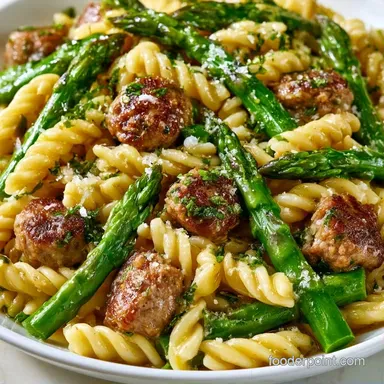
Sausage Asparagus Pasta with Italian Sausage
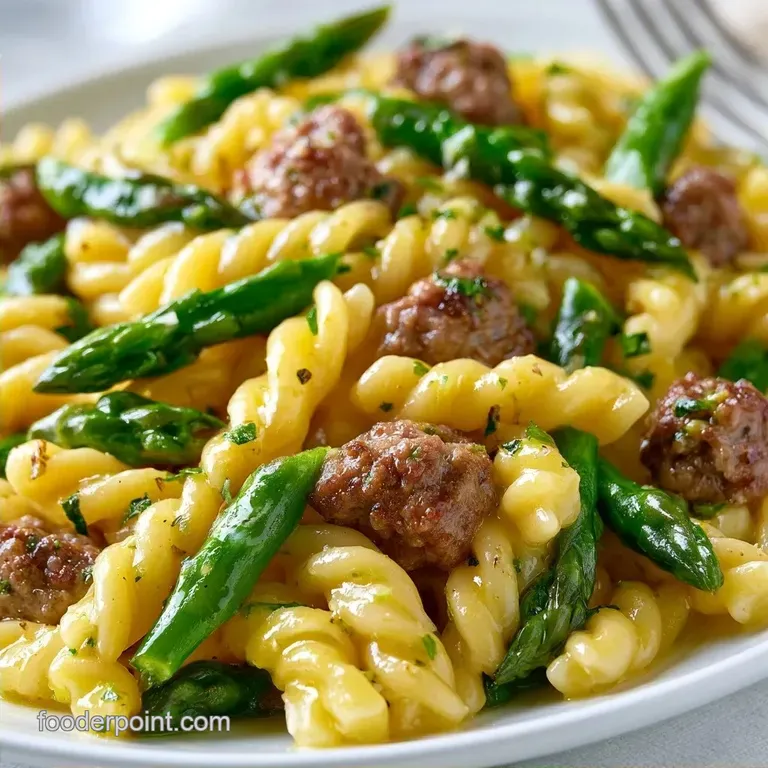
- Prep & Cook: 15 minutes of prep and 20 minutes on the stove
- What to Expect: Rich, seared sausage paired with snappy, fresh asparagus
- Best For: Hectic evenings or satisfying a large crowd
There's nothing quite like the sound of Italian sausage searing in a hot skillet to signal a delicious meal. Many of these pasta recipes draw inspiration from "cucina povera," an Italian American approach focused on using simple, available staples.
It’s the art of turning basic ingredients into a cozy, satisfying dinner through the magic of high heat.
I once believed that a generous amount of heavy cream was the only way to achieve a professional, clingy sauce. As it turns out, the secret is simply using the starchy pasta water to transform the pan drippings into a smooth, light coating.
Whenever I crave a meal that feels indulgent without the hassle of multiple pots, I turn to this Sausage Asparagus Pasta. It's an affordable option that feeds everyone comfortably without requiring an entire evening of prep.
Quick Specs for Sausage Asparagus Pasta
This recipe is designed for speed and minimal cleanup. We use a Dutch oven to handle everything from searing the meat to finishing the sauce.
| Goal? | Change |
|---|---|
| More heat? | Add 1/2 tsp extra red pepper flakes |
| Tangier taste? | Stir in 1 tsp lemon zest at the end |
| Extra greens? | Add a handful of baby spinach |
Right then, let's look at the tools and ingredients you'll need to get this moving.
What's In the Pan
The key here is using a sturdy pasta like Gemelli or Penne. These shapes have nooks and crannies that grab onto the sauce.
| Ingredient | What It Does | Best Swap |
|---|---|---|
| Italian Sausage | Provides fat and savory salt | Chicken sausage (leaner) |
| Pasta Water | Binds the sauce together | Vegetable broth |
| Parmesan | Adds a nutty, salty finish | Pecorino Romano |
| Asparagus | Adds a fresh, earthy crunch | Broccolini |
The Full Shopping List
- 1 lb (450g) Gemelli or Penne pasta
- 1 tbsp (15ml) Salt Why this? Essential for seasoning the pasta from inside out
- 1 lb (450g) Italian Sausage Why this? Rendered fat creates the sauce base
- 2 tbsp (30ml) Extra virgin olive oil
- 3 cloves (15g) Garlic, minced
- 1 medium (60g) Shallot, finely diced
- 1 lb (450g) Asparagus, woody ends trimmed, cut into 2 inch pieces
- ½ cup (15g) Fresh basil, chiffonade
- ½ cup (50g) Freshly grated Parmesan cheese
- ½ cup (120ml) Reserved pasta water
- ½ tsp (3g) Red pepper flakes
- Salt and black pepper to taste
If you're looking for other quick dinners, my Canned Tomato Pasta Sauce is another great way to use basic pantry staples.
Tools You'll Need
I've focused on the essentials here. You can whip up a fantastic meal without needing an array of specialized tools.
- Large pot: For boiling the pasta.
- Dutch oven: The primary vessel for this dish, though a wide skillet works just as well.
- Wooden spoon: Ideal for breaking apart the sausage.
- Colander: To drain the noodles.
- Measuring cup: Specifically to reserve some of that liquid gold (pasta water).
Step-by-step Instructions
Use these directions for a seamless process. The aim is to have the pasta finish just as the sauce is completed.
Phase 1: The Pasta Prep
- Set a big pot of salted water over high heat until it's boiling.
- Boil the pasta for 1-2 minutes shorter than the package suggests. Note: This keeps the noodles from getting overcooked during the final stir.
- Set aside at least 1 cup of the starchy cooking water before draining the rest.
Phase 2: The Meat Sear
- Warm olive oil in a Dutch oven over medium high heat.
- Stir in the Italian sausage, breaking it up with a wooden spoon.
- Brown for 6-8 minutes until a deep crust develops.
- Move the meat to the edges of the pot, keeping the rendered fat in the middle.
Phase 3: The Aromatics
- Place diced shallots in the center and sauté for 2 minutes until they turn translucent.
- Mix in the minced garlic and red pepper flakes, cooking for 30-60 seconds until aromatic.
Phase 4: The Finishing Touch
- Stir in the asparagus pieces and sauté for 3-5 minutes until they are bright green and crisp tender.
- Turn the heat down to medium. Combine the undercooked pasta, ½ cup of the saved water, and the grated Parmesan.
- Stir briskly for 2 minutes to create a velvety glaze.
- Mix in fresh basil and season with black pepper.
Fixing Common Issues
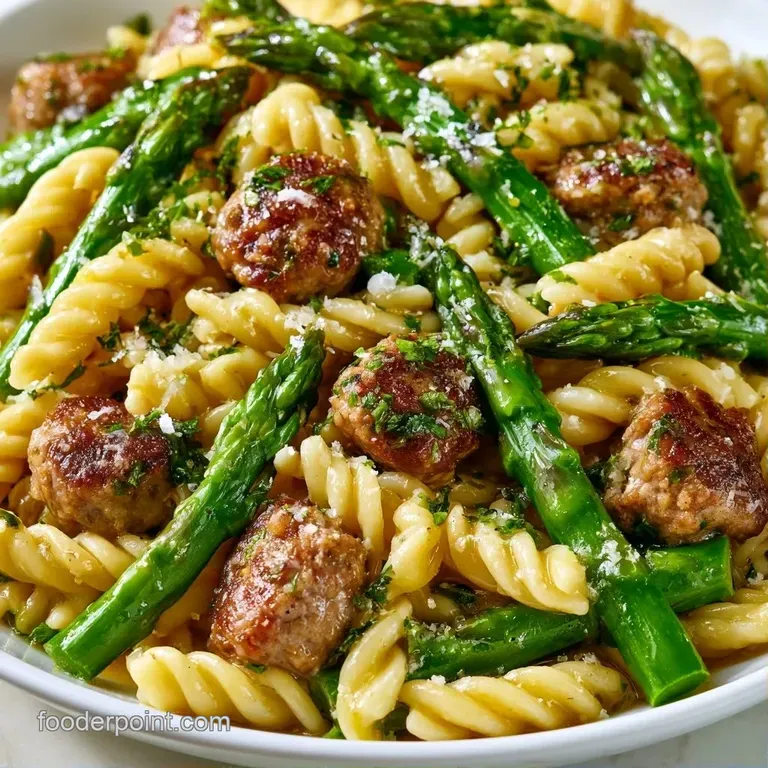
Even straightforward dishes can sometimes go wrong. Here are a few quick fixes.
The Sauce is Too Dry
If the pasta absorbs the liquid too quickly and looks sticky, stir in the reserved pasta water. Use 2 tablespoons at a time until the glossy texture returns.
Overcooked Asparagus
If your asparagus is turning olive drab instead of bright green, it has been cooked too long. Remove the pan from the heat the moment the spears are tender but still retain a slight snap.
The Cheese Clumped
This typically occurs when the Parmesan is added to a pan that is too hot. If this happens, stir in a splash more pasta water quickly to help the cheese melt back into the sauce.
Different Ways to Serve
This Sausage Asparagus Pasta is highly adaptable. Feel free to customize the proteins or vegetables based on what you have on hand.
A Lighter Alternative
Opting for chicken sausage rather than pork results in a leaner meal. Because chicken sausage produces less fat, you may need an additional tablespoon of olive oil to prevent sticking in the pan.
Bake It in the Oven
Transform this into a Sausage Asparagus Pasta Bake by moving the finished mixture to a baking dish. Add a topping of extra mozzarella and broil for 3-5 minutes until the cheese is bubbly.
A Vegan Friendly Version
Replace the sausage with a plant based crumble and substitute the Parmesan with nutritional yeast. This maintains that salty, savory profile without the dairy.
If you enjoy this creamy consistency, you might also like my Lemon Chicken Gnocchi, which employs a similar emulsion method.
Keeping It Fresh
Pasta can be tricky to store because it loves to soak up sauce while it sits in the fridge.
Fridge Storage: Put leftovers in an airtight container. It stays good for 3 days. When you reheat it, the pasta will likely be dry. Add a teaspoon of water or a knob of butter before microwaving to loosen the sauce.
Freezing: I don't recommend freezing this. The asparagus loses its texture and becomes watery upon thawing.
Zero Waste: Don't toss those woody asparagus ends. Throw them in a freezer bag with other veggie scraps (onion skins, carrot tops) to make a homemade stock later.
Best Ways to Serve
Because this meal is so filling, I recommend serving it with a zesty side to balance the savory sausage.
| Style | Suggestion | Why It Works |
|---|---|---|
| Fast | Side Caesar Salad | Chilled, crunchy greens contrast the warm pasta |
| Classic | Garlic Bread | Ideal for soaking up the leftover glaze |
| Light | Sliced Tomatoes | A touch of acidity cleanses the palate |
If you're hosting a formal dinner, plate this in shallow bowls, topped with plenty of fresh basil and a lemon wedge on the side for a final spritz of citrus.
Key Techniques Explained
I'm not a scientist, but after years of making this, I've noticed a few things that make it work.
The Starch Bind: Pasta water contains starch from the noodles. When you whisk it with the fat from the sausage and cheese, it creates a stable emulsion. Serious Eats' testing shows that this creates a sauce that clings to the pasta rather than pooling at the bottom.
Strategic Searing: Browning the meat first creates deep flavor. If you just simmer the sausage, you miss out on those browned bits that give the dish its savory depth.
Under Cooking the Pasta: By pulling the pasta out 2 minutes early, it finishes cooking in the sauce. This means the noodles absorb the flavor of the garlic and sausage instead of just plain water.
Precision Checkpoints: 1. Sausage should brown for 6-8 minutes. 2. Asparagus needs only 3-5 minutes of heat. 3. Final emulsification takes exactly 2 minutes of vigorous stirring.
Trust me, once you stop using heavy cream and start using pasta water, you'll never go back. It's a simpler way to get a rich result. Enjoy your dinner!
Recipe FAQs
Do asparagus and pasta pair well together?
Yes, they are a classic pairing. The earthy notes of the asparagus balance the savory richness of the Italian sausage and Parmesan cheese.
Which sauce works best for this combination?
A light emulsion of pasta water and cheese. This creates a glossy coating that highlights the fresh vegetables; for a richer alternative, try a homemade alfredo.
How to prevent the asparagus from overcooking?
Sauté the pieces for only 3-5 minutes. Adding them toward the end of the process ensures they remain bright green and crisp tender.
Is it true that you must add cream to achieve a velvety sauce?
No, and here's why. The starch in the reserved pasta water binds with the melted Parmesan to create a naturally smooth glaze.
Sausage Asparagus Pasta