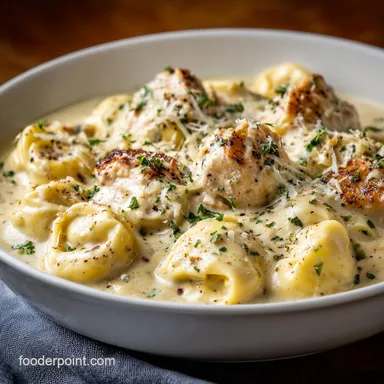
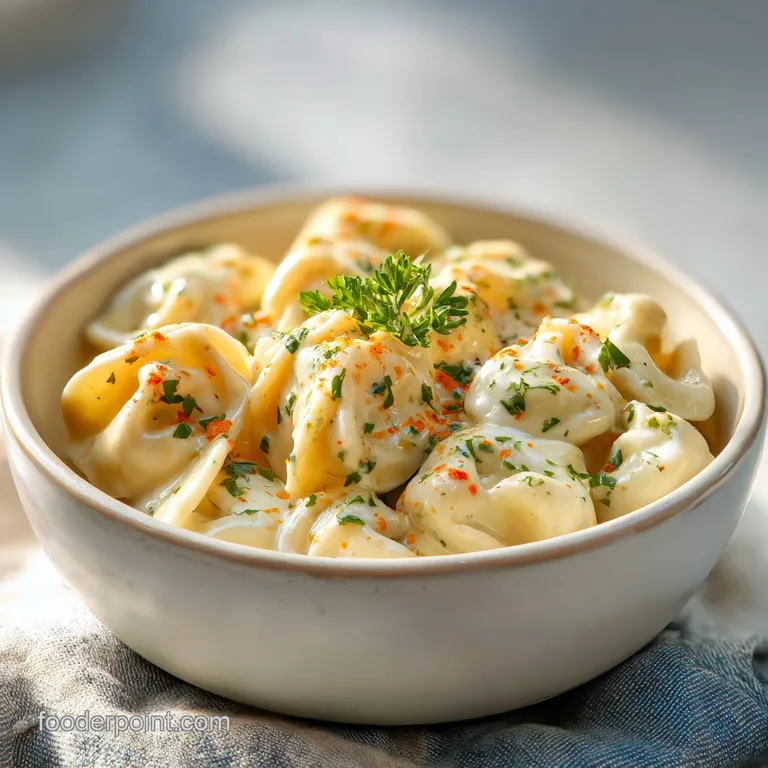
Chicken Tortellini Alfredo: Creamy and Savory
- Time: Active 10 minutes, Passive 15 minutes, Total 25 minutes
- Flavor/Texture Hook: Velvety, garlic infused cream sauce with golden seared chicken and tender, cheese filled pasta
- Perfect for: A comforting family dinner when you need maximum flavor with minimal dishes
- Why This Creamy Chicken Tortellini Alfredo Is My Favorite Weeknight Meal
- How the Elements Work Together to Create Texture
- Component Analysis for the Perfect Emulsion
- Selecting Your Elements for Maximum Flavor
- The Step-by-Step Cooking Process
- Troubleshooting Your Alfredo Sauce
- Adjusting the Recipe for Any Crowd
- Debunking Popular Kitchen Wisdom
- Preservation Secrets and Zero Waste
- Perfect Pairings for a Balanced Plate
- CRITICAL Sodium Alert
- Recipe FAQs
- 📝 Recipe Card
Why This Creamy Chicken Tortellini Alfredo Is My Favorite Weeknight Meal
There is a specific sound that happens when you get the sauce for a Chicken Tortellini Alfredo exactly right. It isn't a splash; it's a soft, heavy "schloop" as the pasta slides through a coating so thick and glossy it looks like liquid silk.
I remember the first time I actually nailed this I had spent years trying to make "light" versions with milk or half and half, only to end up with a watery, grainy puddle that separated the moment it hit the plate.
The secret, I finally realized, was leaning into the heavy cream and the specific way it bonds with the cheese.
The heart of this dish isn't actually the pasta it's the heavy whipping cream. Specifically, we're looking for that 36% fat content. I used to think I could shortcut this with lower fat options, but the science just doesn't support it.
High fat cream acts as a stabilizer, wrapping its molecules around the proteins in the Parmigiano Reggiano to prevent them from clumping together into those annoying, rubbery strings. When you combine that fat with the golden crust on a perfectly seared piece of chicken, you get a meal that feels like a hug in a bowl.
We are going for a vibe that is unashamedly hearty and budget friendly. You don't need a dozen pans or a culinary degree to make this work. You just need a heavy skillet, a bit of patience with your heat levels, and a block of real cheese.
Trust me, once you see that sauce emulsify into a velvety ribbon, you'll never go back to the jarred stuff again. It’s the kind of meal that makes the whole house smell like a high end Italian bistro, but with the comfort of knowing you can eat it in your pajamas.
How the Elements Work Together to Create Texture
Understanding the behavior of your ingredients helps you stay in control of the pan. This isn't about being a scientist; it's about knowing why we don't just dump everything in a pot and hope for the best.
- The Fat Barrier: Heavy cream contains enough fat to withstand simmering without curdling, providing a smooth base that "shields" the cheese from direct, harsh heat.
- Starch Bonding: The reserved pasta water contains dissolved starches that act as a glue, helping the fat heavy sauce actually stick to the slick surface of the tortellini.
- Residual Heat Melting: By removing the skillet from the heat before adding the cheese, we ensure the Parmesan melts gently rather than seizing into a grainy mess.
- Maillard Browning: Searing the chicken at high heat creates a savory crust that dissolves slightly back into the sauce, adding a deep, "cooked all-day" flavor profile.
| Method | Time | Texture | Best For |
|---|---|---|---|
| Fresh Skillet | 25 minutes | Crispy chicken, velvety sauce | Ultimate flavor and texture |
| Shortcut Bake | 40 minutes | Soft and tender, bubbly cheese | Hands off family feeding |
| One Pot Method | 20 minutes | Extra starchy, very thick | Busy weeknights, minimal cleanup |
Cooking the chicken separately is a non negotiable step for me. If you boil the chicken in the sauce, it turns rubbery and gray. By giving those strips a hard sear in oil first, we lock in the juices and create those little brown bits in the pan called "fond" that get deglazed by the cream.
This adds a level of complexity you just can't get from a single pot boil.
Component Analysis for the Perfect Emulsion
Every ingredient in this recipe serves a functional purpose. When we talk about real food, we're talking about ingredients that do the heavy lifting so you don't have to rely on artificial thickeners or stabilizers.
| Ingredient | Science Role | Pro Secret |
|---|---|---|
| Heavy Cream | Primary Emulsifier | Never use "ultra pasteurized" if you can avoid it; the flavor is flatter. |
| Parmigiano Reggiano | Protein & Salt Structure | Grate it yourself on a microplane to ensure it melts in seconds. |
| Pasta Water | Starch Based Binder | This is the "liquid gold" that stops the sauce from separating on the plate. |
| Nutmeg | Flavor Bridge | It cuts through the heavy fat and makes the dairy taste "creamier" and brighter. |
Don't be tempted to swap the heavy cream for milk unless you're prepared for a much thinner, less stable sauce. If you're looking for a similar vibe but with a different pasta shape, you might enjoy my Alfredo in 30 Minutes recipe which uses a very similar base technique. The high fat content in the cream is what allows us to simmer the sauce down into that thick, luscious coating without it breaking.
Selecting Your Elements for Maximum Flavor
- 1.5 lbs chicken breasts: Sliced into 1 inch strips. Why this? Strips cook fast and provide more surface area for that golden, savory sear.
- Substitute: Chicken thighs (boneless) for a juicier, more forgiving protein.
- 20 oz refrigerated cheese tortellini: Found in the deli section. Why this? Fresh pasta has a better "bite" and cooks much faster than dried versions.
- Substitute: Dried tortellini (boil 8-10 minutes) or even cheese ravioli.
- 2 cups heavy whipping cream: Minimum 36% fat. Why this? Provides the structural integrity needed to hold the cheese in a smooth emulsion.
- Substitute: Full fat coconut milk (note: adds a distinct tropical flavor).
- 1.5 cups Parmigiano Reggiano: Freshly grated. Why this? Pre shredded cheese is coated in potato starch, which makes sauces grainy and thick.
- Substitute: Pecorino Romano for a saltier, funkier tang.
- 1/2 cup unsalted butter: To control the salt level. Why this? Adds a rich, nutty depth that cream alone cannot provide.
- Substitute: Salted butter (reduce the kosher salt in the chicken seasoning).
- 3 cloves garlic: Microplaned. Why this? Minced garlic can stay crunchy; microplaning lets it melt into the sauce.
- Substitute: 1 tsp garlic powder in the sauce if fresh isn't available.
- Kosher salt, black pepper, garlic powder: For the chicken seasoning.
- 2 tbsp high smoke point oil: For searing.
- 1/4 tsp nutmeg: Freshly grated is best.
- 1/2 cup reserved starchy pasta water: Don't forget to scoop this out before draining!
The step-by-step Cooking Process
Chef's Note: Before you even turn on the stove, grate your cheese and slice your chicken. This recipe moves very fast once the cream starts simmering, and you don't want to be fumbling with a grater while your sauce is reducing.
- Prep the chicken. Pat the chicken strips completely dry with paper towels. Season evenly with kosher salt, black pepper, and garlic powder. Note: Moisture is the enemy of a good sear; dry meat browns faster.
- Sear the protein. Heat 2 tablespoons of oil in a large 12 inch heavy bottomed skillet over medium high heat. Sear the chicken until golden brown and cooked through (about 5-7 minutes). Remove from the pan and set aside.
- Boil the tortellini. Cook the refrigerated tortellini in a pot of salted water, removing them exactly 60 seconds before the package instructions suggest.
- Save the water. Scoop out 1/2 cup of the cloudy pasta water before draining the tortellini. Set this aside near your skillet.
- Build the sauce base. In the same skillet used for the chicken, melt the butter over medium heat. Scrape up those brown bits! Whisk in the heavy whipping cream and minced garlic.
- Simmer and reduce. Let the cream mixture simmer for 3-5 minutes until slightly thickened and bubbling gently. You want it to coat the back of a spoon.
- The off heat melt. Remove the skillet from the heat entirely. This is crucial! Gradually fold in the grated Parmigiano Reggiano and nutmeg, whisking until the sauce is velvety and smooth.
- The marriage. Add the tortellini, the seared chicken, and half of the reserved pasta water to the sauce.
- Emulsify the dish. Toss gently over low heat for 1 minute until the sauce clings to every fold of the pasta. Add more pasta water if the sauce looks too thick.
- Final touch. Taste and add a pinch more salt or pepper if needed. Serve immediately while the sauce is at its peak glossiness.
Troubleshooting Your Alfredo Sauce
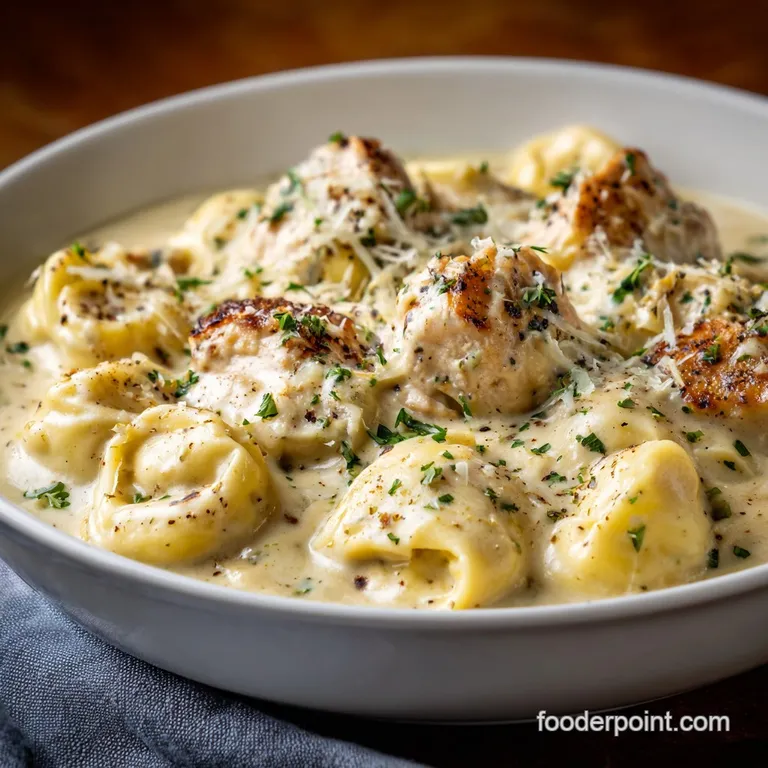
Why Your Sauce is Grainy or Clumpy
This is the most common heartbreak in Italian cooking. Usually, it happens because the cheese was added to a sauce that was boiling, or you used the "green shaker can" Parmesan. Real cheese has delicate proteins that tighten up and squeeze out moisture if they get too hot, resulting in a gritty texture.
| Problem | Root Cause | Solution |
|---|---|---|
| Broken/Oily Sauce | Heat was too high after adding cheese | Whisk in a tablespoon of cold heavy cream off heat |
| Dry/Sticky Pasta | Sauce reduced too much | Add reserved pasta water 1 tablespoon at a time |
| Bland Flavor | Not enough salt or acidity | Add a squeeze of lemon or more Parmigiano |
Another common culprit is the pre shredded cheese from the grocery store. It’s coated in cellulose (wood pulp) to keep it from sticking in the bag. That cellulose prevents it from melting smoothly into your cream. Always buy the block and grate it yourself it's cheaper and tastes significantly better.
Common Mistakes Checklist
- ✓ Forgetting to save the pasta water (the starch is essential for the sauce to stick).
- ✓ Adding the cheese while the pan is still on high heat (this causes clumping).
- ✓ Overcooking the tortellini in the water (they will turn to mush when tossed in the sauce).
- ✓ Using "light" cream or milk (the sauce will be thin and prone to breaking).
- ✓ Crowding the pan when searing chicken (it will steam instead of brown).
Adjusting the Recipe for Any Crowd
When you're scaling this recipe down for two, it's pretty straightforward. Use half of everything, but keep an eye on the sauce reduction. Smaller amounts of cream evaporate much faster, so you might only need to simmer for 2 minutes instead of 5.
For the egg based pasta, you don't need to worry about splitting anything just use half a bag of the refrigerated tortellini.
Scaling up for a big family gathering (like 8-10 people) requires a bit more strategy. Don't try to sear 3 lbs of chicken in one skillet at once; do it in two or three batches so the meat actually browns. When you double the sauce, don't necessarily double the salt right away.
Spices and salt don't always scale linearly. Start with 1.5 times the salt and taste as you go. You'll likely need a massive pasta pot and your largest wide skillet to ensure everything gets tossed evenly without crushing the tortellini.
If you find yourself with leftovers or want to try a version with more kick, you should check out my Soup in 30 Minutes recipe. It uses similar ingredients but transforms them into a hearty broth based meal that scales beautifully for large groups.
Debunking Popular Kitchen Wisdom
One of the biggest myths is that you need flour or a roux to thicken an Alfredo sauce. A traditional Alfredo or at least the American Italian hybrid we love relies entirely on the reduction of heavy cream and the melting of cheese.
Adding flour makes the sauce taste "pasty" and covers up the delicate flavor of the Parmigiano.
Another myth is that rinsing your pasta helps the sauce stick. This is the exact opposite of the truth! Rinsing pasta removes the surface starch that acts as the "velcro" for your sauce. Drain your tortellini and get them straight into that skillet.
That slightly sticky surface is exactly what you want for a cohesive, creamy finish.
Preservation Secrets and Zero Waste
Storage Guidelines This dish is best eaten immediately, as cream sauces tend to thicken and "set" as they cool. However, if you have leftovers, they will keep in an airtight container in the fridge for up to 3 days.
Do not freeze this dish; the cream and cheese emulsion will completely shatter upon thawing, leaving you with a greasy, separated mess.
Reheating the Right Way Whatever you do, don't just throw a bowl of this in the microwave for three minutes. The high heat will break the sauce. Instead, put the leftovers in a small skillet over low heat. Add a splash of milk or a teaspoon of water and stir constantly as it warms up.
This "re emulsifies" the fats and brings back that velvety texture.
Zero Waste Tips If you have leftover Parmigiano Reggiano rinds, don't throw them away! Throw them into a freezer bag. The next time you make a vegetable soup or a slow cooked tomato sauce, toss a rind in. It adds an incredible savory depth (umami) that you can't get from salt alone.
Also, if you have extra heavy cream that's about to expire, you can whip it and freeze dollops of it on a parchment sheet for future coffee toppings or quick desserts.
Perfect Pairings for a Balanced Plate
Since this is a very rich, heavy dish, you want to serve it with something that offers high acidity or a crisp crunch. A simple arugula salad with a sharp lemon vinaigrette is the perfect counterpoint to the buttery sauce. The bitterness of the greens cuts right through the fat of the cream.
If you want to stay in the comfort zone, a side of roasted broccoli or sautéed asparagus works beautifully. I like to toss my broccoli in a bit of lemon juice and red pepper flakes to keep the palate awake.
And of course, you can't go wrong with a piece of crusty garlic bread to swipe up every last drop of that sauce from the bottom of the bowl. It's real food, it's hearty, and it's exactly what a busy Tuesday night requires.
CRITICAL Sodium Alert
1710 mg 1710 mg (74% 74%)
The American Heart Association recommends no more than 2,300mg of sodium per day, with an ideal limit of 1,500mg for most adults.
Expert Tips to Significantly Reduce Sodium
-
Choose Low-Sodium Cheese-15%
Parmigiano Reggiano is high in sodium. Opt for a low-sodium or no-salt added grated cheese alternative, or significantly reduce the amount used.
-
Select Unsalted Tortellini-20%
Refrigerated tortellini can contain added sodium. Look for 'low sodium' or 'no salt added' varieties to make a big difference.
-
Eliminate Added Salt-25%
The recipe calls for 1 tsp of kosher salt. Omit this entirely. Seasoning with herbs and spices will provide flavor.
-
Boost Flavor with Herbs and Spices
Enhance the dish's taste by generously using fresh herbs like parsley or basil, and spices like extra black pepper or red pepper flakes.
-
Use Unsalted Butter-2%
Although not a primary sodium source, switching to unsalted butter helps control overall sodium intake.
Recipe FAQs
Does Alfredo sauce go with tortellini?
Yes, it is a classic pairing. The richness of the heavy cream and Parmigiano Reggiano sauce perfectly complements the savory cheese filling inside the pasta.
Is chicken tortelloni alfredo healthy?
No, this dish is considered a calorie dense indulgence. Each serving contains 1,449 kcal, primarily due to the heavy cream and butter base used to achieve the sauce's signature velvety texture.
What kind of sauce goes well with tortellini?
Alfredo is the most popular choice for cheese filled varieties. The high fat content in the cream coats the pasta evenly, though lighter tomato based sauces can also work if you prefer to reduce the overall richness.
What is chicken alfredo tortellini?
It is a hearty meal featuring tender chicken strips tossed with refrigerated tortellini and a scratch made Alfredo sauce. The dish relies on emulsifying Parmigiano Reggiano with heavy cream and starchy pasta water to create a silky, restaurant quality coating.
How to keep the sauce from breaking or separating?
Remove the skillet from the heat entirely before adding the cheese. Gradual, steady whisking away from direct heat ensures the cheese melts into a stable emulsion without clumping or turning oily. If you enjoyed mastering this stable emulsion, you can apply the same temperature control principles to other cream based pan sauces.
How to ensure the chicken stays juicy?
Pat the chicken strips completely dry with paper towels before searing. Removing surface moisture prevents the chicken from steaming, allowing it to develop a golden crust quickly while keeping the interior tender.
How to cook the tortellini perfectly?
Boil the pasta until exactly 60 seconds before the package instructions suggest. Finishing the pasta in the sauce with the reserved starchy water allows it to absorb the flavors while reaching the ideal al dente texture.
Creamy Chicken Tortellini Alfredo