Homemade Mint Tea with Fresh Leaves

- Time: 5 min active + 10 min steeping
- Flavor/Texture Hook: Bright, aromatic, and clean
- Perfect for: A post dinner digestif or a mid afternoon reset
- Brewing a Fresh Mint Tea
- What Each Ingredient Does
- The Essential Ingredients
- Minimal Tools Required
- Step-by-Step Brewing Process
- Fixing Common Brew Issues
- Ingredient Swaps and Variations
- Adjusting the Batch Size
- Common Brewing Myths
- Storage and Waste Tips
- Perfect Drink Pairings
- Recipe FAQs
- 📝 Recipe Card
Ever wonder why some teas taste like actual garden herbs while others just taste like hot, minty water? I used to just throw a few leaves in a mug and hope for the best, but the results were always flat.
Then I learned about "slapping" the mint, a quick flick of the wrist that wakes up the aromatic oils before the water even touches the leaf.
The smell that hits you the moment the hot water hits those bruised leaves is incredible. It isn't just about the flavor, it's about that sharp, clean scent that clears your head instantly.
You don't need a fancy setup to get this right. We're keeping it simple with minimal tools, focusing on a few small tweaks that make a huge difference in the final cup of Mint Tea.
Brewing a Fresh Mint Tea
- Leaf Bruising
- Gently pressing the mint breaks the cell walls, which lets the essential oils escape into the water.
- Temperature Control
- Letting the water cool for 30 seconds prevents the leaves from scorching, which keeps the taste clean.
- Covered Steeping
- A lid traps the steam and volatile oils, stopping them from evaporating into the air.
| Method | Time | Texture | Best For |
|---|---|---|---|
| Stovetop | 15 mins | Heavy/Robust | Cold weather |
| Kettle | 15 mins | Light/Clean | Quick breaks |
What Each Ingredient Does
| Ingredient | What It Does | Best Swap |
|---|---|---|
| Fresh Mint | Provides the core aromatic flavor | Dried mint (use half amount) |
| Filtered Water | Clean base that doesn't mask mint | Spring water |
| Honey | Adds a mellow, floral sweetness | Maple syrup |
| Fresh Lemon | Cuts through sweetness with acidity | Lime slice |
The Essential Ingredients
- 2 cups (480ml) filtered water
- 1 cup (30g) fresh mint leaves, loosely packed Why this? Fresh leaves have more volatile oils than dried
- 1 tbsp (15g) honey Why this? Pairs better with mint than white sugar
- 1 slice fresh lemon Why this? Adds brightness to the herbal notes
Minimal Tools Required
You can get away with almost nothing here, but these make it easier. I usually use a simple stainless steel kettle and two ceramic mugs. A fine mesh strainer is a lifesaver if you hate chewing on leaves, though some people like to leave them in.
Chef: If you don't have a strainer, you can use a clean piece of cheesecloth or just a very steady hand when pouring.
Step-by-step Brewing Process
- Rinse the fresh mint sprigs under cool running water.
- Pluck the leaves from the stems.
- Gently press or slap the leaves in your palm to bruise them. Note: This releases the scent
- Bring the water to a rolling boil in a kettle.
- Remove from heat and let it sit for 30 seconds until it drops slightly below 212°F (100°C).
- Place the bruised mint leaves into mugs or a teapot.
- Pour the hot water over the leaves.
- Cover with a lid or saucer and steep for 5 to 7 minutes until the water turns a pale golden green.
- Strain the leaves from the liquid using a fine mesh strainer.
- Stir in honey while hot and add a slice of lemon.
Fixing Common Brew Issues
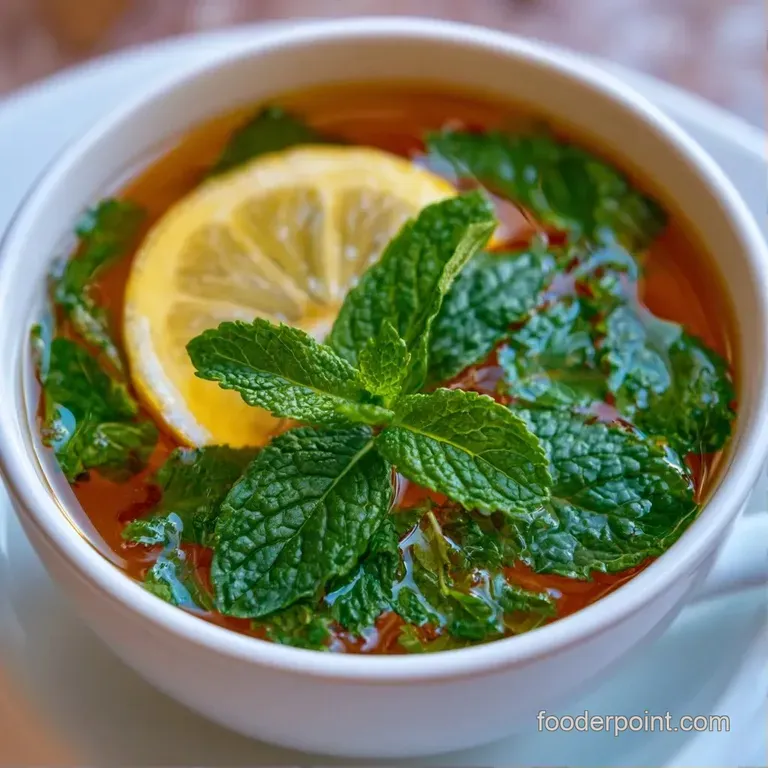
If your tea tastes like grass, you probably didn't bruise the leaves enough. The oils are locked inside the leaf structure, so you have to physically break those walls to get the flavor out.
If it's too bitter, you likely used boiling water directly on the leaves. This "burns" the delicate mint, releasing tannins that clash with the freshness.
Why Your Tea Tastes Bitter
This usually happens when the water is too hot or the steep time is too long.
| Problem | Root Cause | Solution |
|---|---|---|
| Bitter aftertaste | Water was boiling (212°F) | Let water cool 30 seconds first |
| Grassy flavor | Leaves weren't bruised | Slap leaves firmly before brewing |
| Cloudy liquid | Steeped too long | Limit steeping to 7 minutes |
Ingredient Swaps and Variations
You can easily tweak this for different moods. If you want something a bit more complex, try adding a pinch of cinnamon or a slice of fresh ginger. For those who prefer a cold drink, this makes a great base for a Honey Mint Lemonade recipe if you dilute it with a bit more lemon and ice.
If you only have dried mint, use about 1 tablespoon of dried leaves for every cup of water. Since dried leaves are more concentrated, let them steep for only 3 to 4 minutes to avoid that "medicinal" taste.
| Original Ingredient | Substitute | Why It Works |
|---|---|---|
| Honey (1 tbsp) | Maple Syrup (1 tbsp) | Similar viscosity. Note: Adds a woody, autumn flavor |
| Fresh Mint (1 cup) | Dried Mint (2 tbsp) | Concentrated oils. Note: Lacks the "bright" punch of fresh |
| Lemon Slice | Lime Slice | Higher acidity. Note: Gives a more tropical vibe |
Adjusting the Batch Size
When making this for a crowd, don't just multiply the mint by ten.
- Scaling Down (1 serving): Use 1 cup water and 1/2 cup mint. The steeping time remains the same.
- Scaling Up (4+ servings): Increase the water and mint linearly, but only increase the honey to 1.5x the ratio. You can always add more sweetness at the end, but you can't take it out.
If you're brewing a huge pot, use a larger vessel to ensure the leaves have room to move and expand. This prevents "clumping," which leads to uneven flavor.
Common Brewing Myths
Some people think boiling the mint leaves directly in the pot is the way to go. This actually destroys the delicate aromatic compounds. You want to infuse, not boil.
Another myth is that you need "special" Moroccan mint for the real deal. While Mentha spicata is traditional, any fresh peppermint or spearmint from the grocery store works brilliantly for a homemade mint tea.
Storage and Waste Tips
I don't recommend storing brewed Mint Tea for more than 2 days in the fridge. After that, the bright green color fades to a dull brown, and the flavor loses its punch. To reheat, do it slowly on the stove; don't let it boil again or it will turn bitter.
Don't toss the mint stems! I throw mine into the compost bin, but you can also simmer them with a bit of lemon peel to make a natural room fragrance. If you have a huge harvest of mint, check out tips on preserving fresh mint to keep some for winter.
Perfect Drink Pairings
This drink is a natural digestif, so it's great after a heavy meal. It pairs well with light, citrusy desserts or simple shortbread cookies. If you're looking for something non alcoholic and fancy for guests, a Lime Mint Mocktail uses similar flavor profiles but feels more like a celebration.
For a cozy afternoon, try it with a slice of toasted sourdough and honey. The earthy tones of the bread balance the sharp, clean notes of the tea.
Recipe FAQs
What's the best way to make fresh mint tea?
Bruise fresh mint leaves in your palm to release aromatic oils, then steep them in water slightly below 212°F (100°C) for 5 to 7 minutes. Strain the leaves and stir in honey and a slice of lemon.
Can mint tea help with nausea?
Yes. The natural menthol helps relax the muscles in the digestive tract, which can effectively soothe an upset stomach.
Is it true that mint water can reduce acne?
No, this is a common misconception. While staying hydrated supports overall skin health, there is no clinical evidence that mint water treats acne.
Is mint tea good for diabetics?
Yes, provided you limit sweeteners. Pure mint tea is naturally calorie free and sugar-free, though adding honey will increase the glucose content.
What are some great recipes using fresh mint?
Use it in fresh salads, summer cocktails, or as a garnish for fruit desserts. If you love the bright, citrusy balance in this tea, see how we use a similar flavor balancing technique in our lemon ricotta cookies.
How do I make mint water?
Infuse cold filtered water with fresh mint leaves. Let the leaves steep in the refrigerator for several hours to develop a light, refreshing flavor.
What herb can I substitute for mint in a mojito?
Basil or spearmint are the best choices. Basil provides a peppery, aromatic sweetness that mimics the complexity of mint in a cocktail.
Homemade Fresh Mint Tea