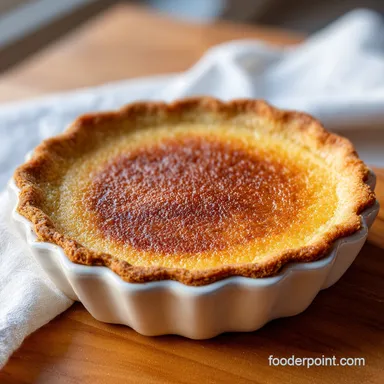
Old Fashioned Chess Pie: Silky and Traditional
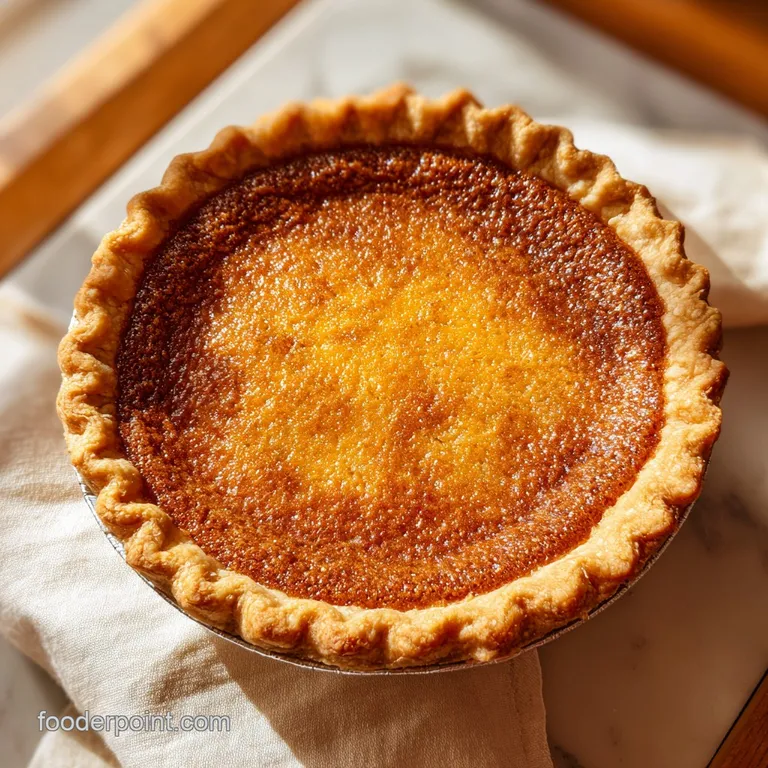
- Time: Active 15 minutes, Passive 50 minutes, Total 65 minutes
- Flavor/Texture Hook: Silky custard with a shatter crisp golden crust
- Perfect for: Holiday gatherings, Sunday dinners, or beginner bakers
- A Traditional Southern Chess Pie Recipe
- Hidden Secrets of the Custard
- Ingredient Deep Dive Analysis
- Essential Pantry Ingredient List
- Tools for Your Best Bake
- Complete Step by Step Instructions
- Avoiding Common Baking Mistakes
- Easy Creative Flavor Swaps
- Storing Your Sweet Leftovers
- Serving Ideas for Best Flavor
- Recipe FAQs
- 📝 Recipe Card
A Traditional Southern Chess Pie Recipe
Forget the idea that you need a culinary degree or a kitchen full of exotic thickeners to make a world class dessert. There is a common myth floating around that old-fashioned custard pies are temperamental, prone to "scrambling," or require hours of simmering on a stovetop. Honestly, that is just not the case here.
This recipe is the ultimate proof that pantry staples like sugar, eggs, and a splash of vinegar can transform into something truly magical without any high stress techniques.
We are diving into a dessert that is as humble as it is decadent. I remember the first time I pulled one of these out of the oven, the aroma of toasted butter and sweet vanilla filled every corner of my home. It felt like a warm hug from a Southern grandmother I never had.
The magic lies in the simplicity, but don't let that fool you into thinking it's boring. The layers of flavor, from the tangy zip of the vinegar to the nutty crunch of the cornmeal, create a profile that is surprisingly sophisticated.
You can expect a pie that has a distinct personality. It isn't just a sugar bomb, it is a study in textures. You get that satisfying "shatter" from the thin, sugary crust on top, followed by a velvety, dense custard that melts on your tongue.
It’s the kind of treat that makes people stop talking and just enjoy the moment. We are going to walk through every step together, ensuring you avoid the soggy bottoms and cracked tops that plague so many other bakers.
Hidden Secrets of the Custard
Acidic Balance: The white distilled vinegar isn't there for flavor, but to break down sugar chains and prevent the custard from becoming cloyingly sweet. It provides a subtle tang that cleanses the palate between bites.
Starch Suspension: Cornmeal acts as a stabilizing bridge, giving the custard enough structure to slice cleanly while adding a delicate, corn forward nuttiness. It prevents the filling from becoming too "eggy" or runny.
Fat Saturation: Using melted butter instead of cream creates a denser, more fudge like consistency. This allows the sugar to caramelize more effectively on the surface, forming that iconic crackly lid.
Albumin Seal: Brushing the par baked crust with egg white creates a waterproof barrier. This keeps the moisture from the custard from seeping into the pastry, ensuring a flaky bottom.
| Preparation Method | Time | Texture | Best For |
|---|---|---|---|
| Traditional Oven | 50 minutes | Crackly top, dense center | The classic experience |
| Stovetop Custard | 20 minutes | Creamy, smooth, no crust | Quick pudding cups |
| Air Fryer (Mini) | 25 minutes | Extra crispy edges | Small batch cravings |
While the stovetop method is faster for making a basic pudding, it completely misses out on the chemical reaction that happens in the oven. The dry heat of the oven is what allows the sugar to migrate to the top and crystallize, creating that beautiful, paper thin crust that defines this dish. If you love a classic bake, you might also enjoy the layers in my Southern Pecan Pie Bars which use a similar sugar to fat ratio for that perfect chew.
Ingredient Deep Dive Analysis
| Component | Science Role | Pro Secret |
|---|---|---|
| Fine Cornmeal | Structural Binder | Use yellow cornmeal for a vibrant, golden hue and better flavor contrast. |
| Distilled Vinegar | pH Balancer | This prevents the "scrambled egg" taste by slowing down protein coagulation. |
| Granulated Sugar | Texturizer | Sugar doesn't just sweeten, it helps create the "crust" on top through moisture migration. |
| Large Eggs | Emulsifier | Room temperature eggs incorporate more smoothly without needing heavy whisking. |
One thing I've learned through my passion for classic baking is that the quality of your vanilla extract makes a huge difference here. Since there are so few ingredients, each one has a spotlight on it.
Use a pure extract rather than imitation to ensure those floral, sweet notes really sing through the richness of the butter and sugar.
Essential Pantry Ingredient List
- 1 single 9 inch pie crust: Homemade or high-quality store-bought works. Why this? Provides the flaky, salty vessel for the sweet filling.
- 1 egg white: Beaten slightly. Why this? The "glue" that prevents a soggy bottom.
- 2 cups (400g) granulated sugar: Standard white sugar. Why this? Provides bulk, sweetness, and the signature top crust.
- 2 tbsp (18g) fine ground yellow cornmeal: Don't use coarse grit. Why this? The secret Southern thickener for perfect texture.
- 1 tbsp (8g) all purpose flour: Standard baking flour. Why this? Works with cornmeal to ensure a clean slice.
- 0.5 tsp (3g) fine sea salt: Enhances everything. Why this? Cuts through the sugar to highlight the butter.
- 0.5 cup (113g) unsalted butter: Melted and cooled. Why this? Adds richness and a silky mouthfeel.
- 4 large eggs: Must be room temperature. Why this? The primary structure and protein for the custard.
- 0.25 cup (60ml) whole milk: Full fat is best. Why this? Adds just enough liquid for a smooth pour.
- 1 tbsp (15ml) white distilled vinegar: Plain and simple. Why this? Chemical balance that cuts the sugar's intensity.
- 1 tbsp (15ml) pure vanilla extract: The main aromatic. Why this? Rounds out the flavor with warmth and depth.
If you find yourself out of white vinegar, you can swap it with lemon juice in a 1:1 ratio. It will add a slight citrus note, but it still provides the necessary acidity to balance the sweetness. Just be aware that lemon juice is slightly less acidic than distilled vinegar, so the "zip" might be a bit softer.
Tools for Your Best Bake
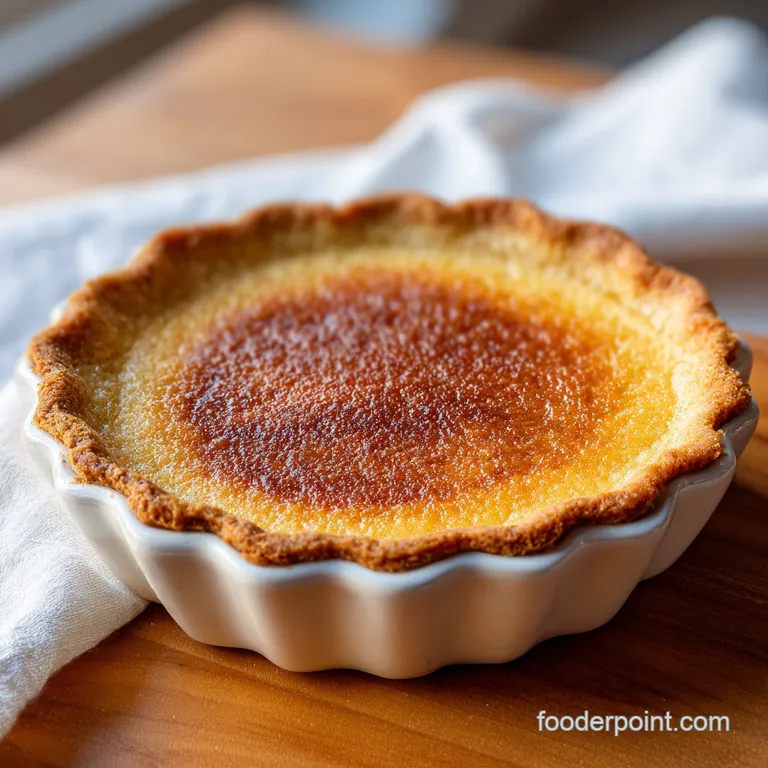
You don't need a stand mixer for this, in fact, I prefer doing it by hand. A large glass mixing bowl and a sturdy wire whisk are your best friends here. You'll also need a 9 inch deep dish pie plate. Make sure it's deep dish because the custard can puff up quite a bit as it bakes before settling back down.
A standard baking sheet is also non negotiable. I always place my pie plate on a sheet before it goes into the oven. This catches any potential drips and, more importantly, makes it much easier to slide the pie in and out without disturbing the delicate, unbaked custard.
If you use a glass pie plate, you can easily peek at the bottom to ensure the crust is golden and fully cooked.
Complete step by step Instructions
1. Prep the base for a crisp bottom
Preheat your oven to 375°F (190°C). Roll out your dough and fit it into the 9 inch deep dish pie plate, crimping the edges for a beautiful finish. Note: A high crimp helps contain the custard if it rises.
2. Blind bake the crust
Line the dough with parchment and fill with pie weights. Bake for 8 to 10 minutes until the edges are pale gold and set. This prevents the "slumping" of the sides.
3. Seal the pastry
Remove the weights and parchment. Immediately brush the bottom and sides with the egg white. Note: The heat from the crust will cook the egg white instantly, creating a waterproof seal. Lower the oven to 350°F (175°C).
4. Whisk the dry base
In your large bowl, combine the granulated sugar, cornmeal, all purpose flour, and sea salt. Whisk vigorously until no clumps of flour remain.
5. Incorporate the butter
Pour the melted and cooled butter into the dry mix. Stir until the mixture looks like wet sand. This ensures the flour and cornmeal are coated in fat, which prevents lumps.
6. Add the eggs gently
Whisk in the 4 large eggs one at a time. Note: Do not over beat, we want to combine them without creating too many air bubbles, which can cause the pie to puff and crack excessively.
7. Final liquid additions
Stir in the whole milk, vinegar, and vanilla extract. Whisk until the filling is uniform and a beautiful pale gold. The texture should be thin but silky.
8. The perfect bake
Place the pie on the baking sheet and pour in the filling. Bake at 350°F for 50 minutes until the edges are set and the top is golden brown. The center should still have a slight "jiggle" when shaken gently.
9. Why cooling is mandatory
Let the pie cool on a wire rack for at least 2 hours. Note: The residual heat continues to set the custard, and the flavors need time to marry. If you cut it too early, the filling will be runny.
Avoiding Common Baking Mistakes
One of the biggest issues people face is the "weeping" pie. This happens when the sugar doesn't fully dissolve or the eggs are overcooked, causing the protein structure to squeeze out moisture. It looks like a little pool of syrup at the bottom of your slice.
To avoid this, make sure your butter is cooled before adding the eggs, and don't bake past the point where the edges are firm.
Another pitfall is the dreaded "scrambled egg" smell. This usually happens if you use very cheap eggs or if the oven temperature is too high. The vinegar actually helps mitigate this, but keeping your oven at a steady 350°F (175°C) is the real secret. If you're looking for another classic that uses a similar custard base, check out my Southern Buttermilk Pie for a slightly different tang.
Why Your Filling Separated
If you see a layer of clear liquid or the cornmeal has all sunk to the bottom, it usually means the mixture wasn't whisked enough before pouring or the oven was too cold. The cornmeal needs that initial heat to start swelling and staying suspended in the custard.
Why the Top Cracked
Small cracks are normal and add to the rustic charm, but deep chasms mean the pie was overbaked or cooled too quickly. The eggs expand when hot and shrink when they cool, so a slow, room temperature cooling process is vital for a smooth surface.
| Problem | Root Cause | Solution |
|---|---|---|
| Liquid center | Underbaked | Bake in 5 minute increments until only the very center jiggles. |
| Toughened crust | Over handled dough | Chill the dough for 30 minutes before rolling to relax gluten. |
| Gritty texture | Coarse cornmeal | Sift your cornmeal or use a "fine" grind specifically. |
Common Mistakes Checklist:
- ✓ Never skip the blind bake, it's the only way to get a truly flaky bottom.
- ✓ Ensure eggs are at room temperature to prevent the butter from seizing.
- ✓ Use a baking sheet to prevent uneven heating from the bottom element.
- ✓ Don't over whisk the eggs, as excess air leads to a "soufflé" effect and eventual collapse.
- ✓ Let the pie sit at room temperature, don't rush it into the fridge while hot.
Easy Creative Flavor Swaps
If you want to put a modern twist on this classic, it's incredibly easy to do. The base is very forgiving. For a Chocolate Chess Pie, simply whisk in 1.5 ounces of melted unsweetened chocolate with the butter. It transforms the dessert into something that tastes like a cross between a brownie and a silk pie.
You'll still get that crackly top, but with a deep, cocoa richness.
You can also play with the acids. While white vinegar is traditional, using a high-quality balsamic or even a splash of bourbon can add incredible complexity. If you go the bourbon route, keep the vinegar but add 1 tablespoon of bourbon for a smoky, caramel like undertone that pairs beautifully with the toasted cornmeal.
| Original Ingredient | Substitute | Why It Works |
|---|---|---|
| Whole Milk | Coconut Milk (Full Fat) | Similar fat content. Note: Adds a tropical nutty flavor. |
| White Vinegar | Lemon Juice | Provides necessary acid. Note: Adds a bright citrus profile. |
| Yellow Cornmeal | Almond Flour | Similar bulk. Note: Result is softer and more "frangipane" like. |
For those who need a dairy-free option, you can easily swap the butter for a high-quality vegan butter stick and the milk for a creamy oat milk. Just ensure the vegan butter has a high fat content (around 80%) so the custard still sets with that luxurious, velvety mouthfeel we're aiming for.
Storing Your Sweet Leftovers
Chess pie is actually better the next day. As it sits, the flavors of the vanilla and butter deepen, and the texture becomes even more fudgy. You can keep it on the counter, covered loosely, for about 24 hours. After that, it really should go into the fridge to stay fresh.
It will last up to 5 days in the refrigerator, though the crust will lose some of its initial "shatter" over time.
For zero waste baking, don't toss those pie crust scraps! I like to roll them out, sprinkle them with cinnamon and sugar, and bake them alongside the pie for a little "chef's snack." If you find yourself with just one or two slices left that are getting a bit soft, you can actually crumble them into vanilla ice cream for a "Chess Pie Swirl" that is absolutely out of this world.
Freezing for Later
Yes, you can freeze this pie! Wrap it tightly in plastic wrap and then a layer of foil. It will stay good for up to 2 months. To serve, let it thaw overnight in the fridge. I recommend popping it into a 300°F (150°C) oven for about 10 minutes after thawing to crisp up the crust again before serving.
Serving Ideas for Best Flavor
While this pie is a star all on its own, a little accompaniment never hurts. A dollop of unsweetened whipped cream is the classic choice because it provides a cool, airy contrast to the dense, sweet custard. I also love serving it with a handful of fresh, tart berries like raspberries or blackberries.
The acidity of the fruit mimics the vinegar in the pie and keeps every bite feeling fresh.
If you're serving this during the holidays, a light dusting of powdered sugar across the top can make it look extra festive. For the ultimate indulgence, serve a slice slightly warm with a scoop of salted caramel ice cream.
The salt in the ice cream pulls out the savory notes of the cornmeal and creates a flavor profile that is truly addictive. Trust me, once you master this simple bake, it will become a permanent fixture in your dessert rotation.
Chef's Note: If you notice the edges of your crust browning too quickly during the 50 minute bake, simply tent the edges with a bit of aluminum foil or use a pie shield. This allows the center to finish cooking without burning the delicate pastry.
Recipe FAQs
What ingredients are required to make a classic chess pie?
You need a standard pantry friendly mix. The base consists of a 9 inch pie crust, granulated sugar, fine ground yellow cornmeal, all-purpose flour, sea salt, melted unsalted butter, 4 large eggs, whole milk, white distilled vinegar, and vanilla extract.
An additional egg white is used to seal the crust before baking.
Is chess pie essentially the same as buttermilk pie?
No, they are distinct. While both are custard style Southern pies, chess pie relies on cornmeal for thickening and white vinegar for a slight acidic tang, whereas buttermilk pie uses buttermilk as the primary acidic and liquid component.
Why is this dessert called a chess pie?
The origin remains debated, but it is likely a linguistic corruption. Many food historians believe the name evolved from "cheese pie" due to its similar consistency, or perhaps it was a "just pie" served by cooks in the American South.
How to achieve the perfect golden set for the filling?
Bake at 350°F on a lower rack for approximately 50 minutes. If you enjoyed learning how to manage the buttery edges here, you will find the same patience required for achieving a clean, golden set in other dense baked goods.
Is it true that Dolly Parton considers this her favorite pie?
Yes, it is a staple of her Southern upbringing. She has frequently cited chess pie as one of her favorite comfort desserts, often highlighting its simple, sweet, and buttery profile.
How to store leftovers to maintain the best texture?
Keep it covered on the counter for 24 hours, then refrigerate. While the crust loses some of its crisp "shatter" in the fridge, the interior filling often becomes more fudgy and flavorful after a day of resting.
How to prevent the filling from bubbling over in the oven?
Place your pie plate on a baking sheet before putting it in the oven. This serves as a safety net to catch any drips while ensuring the oven stays clean throughout the 50-minute bake time.
Old Fashioned Chess Pie